Temples

mu7y1nxac a1kqvnz8sgnrgdyepugv6q5pfgzdcxapgvzzfhqeeml086vkf1qn8hzfw6j2fwbiftmfwhm9mgjvqrxyo m5lkt1yhcri 8icvlrsiiw0vzt78sztrmj8snf1kwgaxsc2qj 7wwwrjyo5vraw jrwut0fofbuilcdrhe0zlnnzbiccyges70j

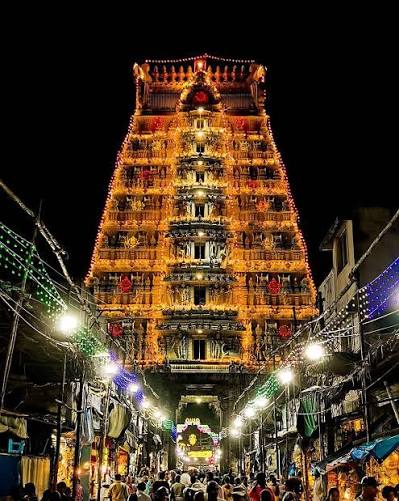
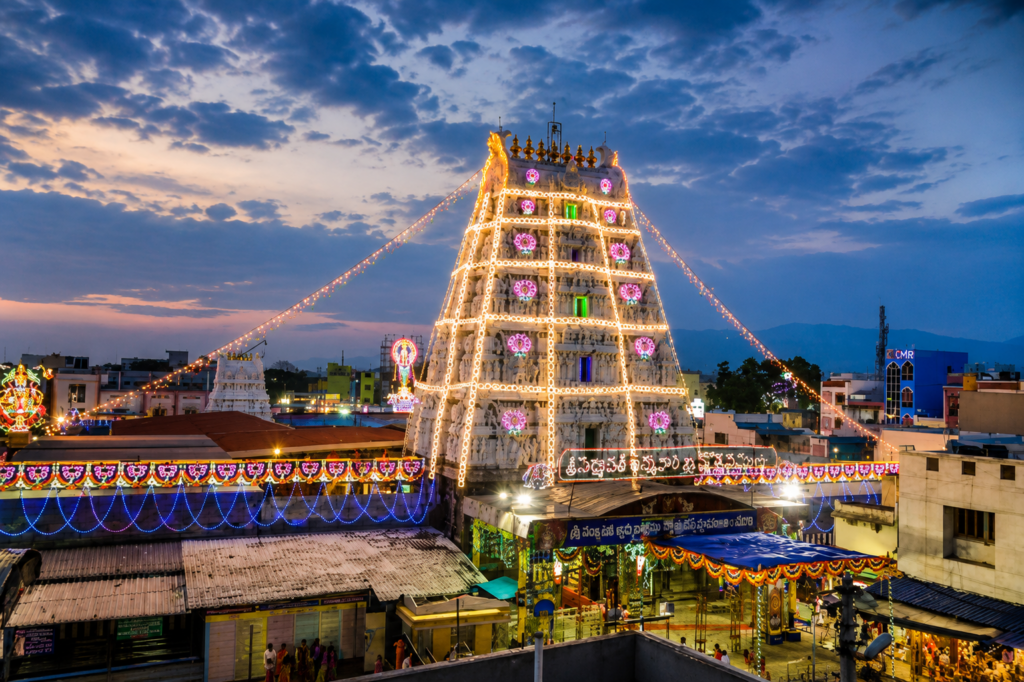
Sri Kalyana Venkateswara Swamy Temple

The Sri Kalyana Venkateswara Swamy Temple at Srinivasa Mangapuram, near Tirupati in Andhra Pradesh, is a revered Hindu shrine dedicated to Lord Venkateswara, an incarnation of Lord Vishnu. It is considered a significant religious site for devotees unable to visit the main Tirumala temple, offering a similar spiritual experience. Key facts Legend and significance According to legend, Lord Venkateswara resided here after marrying Goddess Padmavathi before returning to Tirumala. The temple thus symbolizes divine marriage (Kalyanam) and is especially auspicious for couples seeking blessings for harmony and prosperity. It is regarded as a sacred alternative for those unable to ascend Tirumala Hill. Architecture and layout Built in the traditional Dravidian style, the temple features ornate gopurams (tower gateways), intricately carved pillars, and sanctums aligned with ancient Vaishnavite traditions. The presiding deity, Sri Kalyana Venkateswara Swamy, stands majestically in the main sanctum, with sub-shrines for Padmavathi Devi and other deities within the complex. Festivals and rituals 5 The temple hosts several rituals and festivals mirroring those at Tirumala, notably the Brahmotsavam and Kalyanotsavam (celestial wedding ceremony). Daily sevas and annual celebrations attract large numbers of devotees, especially during auspicious months in the Vaishnavite calendar. Administration and accessibility The temple is administered by Tirumala Tirupati Devasthanams, ensuring rituals follow strict Agama traditions. Located about 12 kilometers from Tirupati city, it is easily accessible by road and is part of the spiritual circuit connecting other Tirupati temples. Pilgrims consider a visit here highly meritorious, especially newlyweds seeking divine blessings.

Sri Kalyana Venkateswara Swamy Temple Read More »
chatgpt image jun 23, 2026, 04 49 09 pm

Kapila Theertham

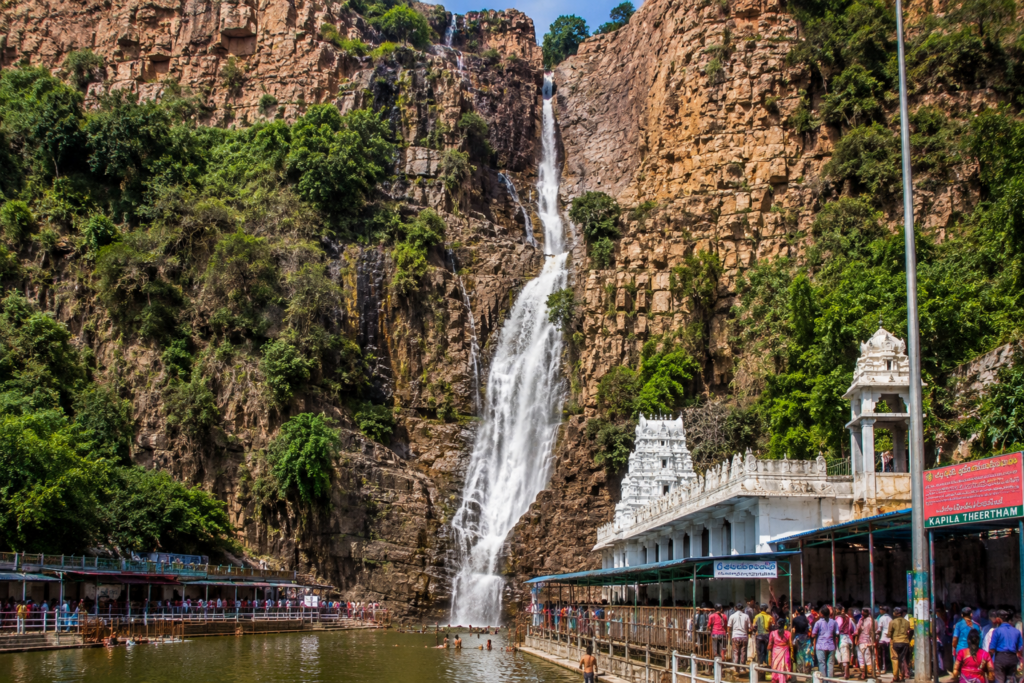
Kapila Theertham is a revered Hindu temple and natural waterfall located at the foothills of the Tirumala Hills in Tirupati, Andhra Pradesh. Dedicated to Lord Shiva as Sri Kapileswara Swamy, it is the only Shiva temple within the Tirupati–Tirumala region and forms a key prelude to pilgrimages up the hills. Its scenic setting and spiritual traditions make it both a sacred and cultural landmark. Key facts Mythological significance According to legend, Sage Kapila Muni performed penance here to Lord Shiva. Pleased by his devotion, Shiva and Parvati appeared before him and blessed him. The self-manifested (Swayambhu) Shiva Linga was installed by the sage, giving the site its name. The waterfall is believed to have emerged when Kapila struck the rock with his water pot (kamandalu), creating the sacred theertham where devotees bathe to cleanse sins and seek blessings. Architecture and setting 6 The temple stands at the entrance to a natural cave beneath steep cliffs of the Seshachalam Hills. Its Dravidian-style gopuram and inner sanctum are complemented by sub-shrines to deities such as Kamakshi, Vinayaka, Subrahmanya, and Krishna. A massive Nandi statue greets visitors at the entrance, while the Kapila waterfall descends into a sacred tank—an iconic image during the monsoon months. Festivals and rituals Major annual events include Kapileswara Swamy Brahmotsavams (February), Maha Shivaratri, and Karthika Deepam. Devotees also observe rituals like Rudra Abhishekam, Sahasranama Archana, and Mahanyasa Rudra Abhishekam. During the full moon of Kartika month, it is believed that the waters of all celestial theerthams merge into Kapila Theertham, granting immense spiritual merit to bathers. Historical background References to Kapila Theertham appear in Chola and Vijayanagara inscriptions from the 11th to 16th centuries CE. Kings such as Sri Krishna Deva Raya endowed the temple with gold and ornaments, and the structure still reflects Vijayanagara artistry. Today, it remains an important site under TTD’s care, blending myth, architecture, and natural beauty into one of Tirupati’s most serene spiritual experiences

Kapila Theertham Read More »

chatgpt image jun 23, 2026, 04 22 54 pm

Sri Kalahasteeswara Swamy Temple

The Sri Kalahasteeswara Swamy Temple is a revered Hindu temple in Srikalahasti, Tirupati District, Andhra Pradesh, India, dedicated to Lord Shiva as Kalahasteeswara. It is renowned for its Vayu (air) Linga, one of the five elemental lingas (Pancha Bhoota Stalas), symbolizing the wind element. Key facts Historical background The temple’s origins trace back to the early Chola period, with significant additions by Vijayanagara kings such as Krishnadevaraya. The architecture combines Dravidian style with intricate stone carvings and towering gopurams. Its legend connects to the story of a spider, snake, and elephant worshipping Shiva—symbolizing devotion beyond caste or form. Architectural significance 6 The temple complex stands beside the Swarnamukhi River and features a majestic 120-foot-high gopuram built by Krishnadevaraya in 1516 CE. Its sanctum houses the self-manifested (swayambhu) Shiva Linga that reportedly sways slightly under the influence of air, reinforcing its association with the Vayu element. Religious importance Sri Kalahasteeswara Swamy Temple is a major Shaivite pilgrimage site and part of the Pancha Bhoota Sthalas along with Arunachaleswarar Temple (fire), Ekambareswarar Temple (earth), Jambukeswarar Temple (water), and Nataraja Temple (space). It is especially visited for rituals meant to alleviate the effects of Rahu and Ketu in astrology. Pilgrimage and access Located about 36 kilometers from Tirupati, the temple attracts devotees year-round, particularly during Maha Shivaratri. Its proximity to Tirupati makes it a key part of the regional pilgrimage circuit in southern Andhra Pradesh.

Sri Kalahasteeswara Swamy Temple Read More »

images (2)

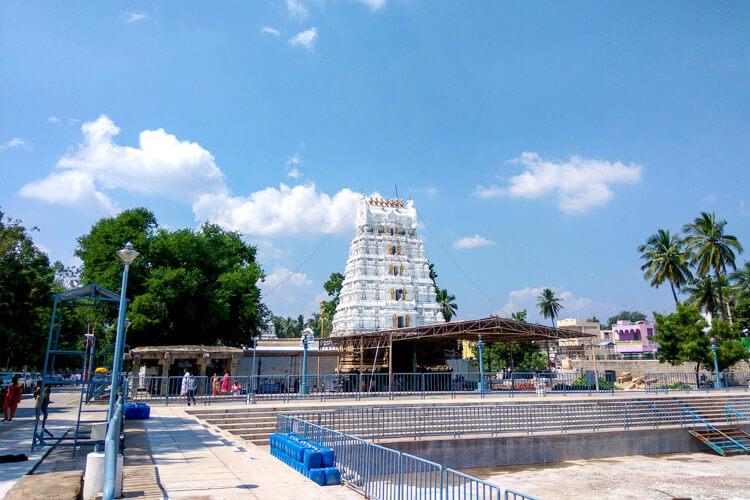
Sri Govindarajaswamy Temple

The Sri Govindarajaswamy Temple in Tirupati, Andhra Pradesh, is a major Hindu shrine dedicated to Lord Govindaraja, a form of Vishnu. It is one of the largest and most important temples in the town, serving as a key companion shrine to the renowned Tirumala Venkateswara Temple. The temple is notable for its Dravidian architecture, historical legacy, and central role in Tirupati’s spiritual life. Key facts Historical background The temple’s origins date to around 1130 CE, when Ramanujacharya consecrated the main deity. It gained prominence during the rule of the Chola and Vijayanagara dynasties, which contributed to its expansion. The temple’s inscriptions record significant donations and the influence of Tamil Vaishnavite traditions in Tirupati’s cultural history. Architecture and layout 6 Built in classic Dravidian style, the temple features a towering seven-tiered rajagopuram (gateway tower), intricately carved pillars, and spacious courtyards. The sanctum houses the reclining form of Lord Govindaraja. The complex also includes shrines to other deities such as Sri Parthasarathy and Andal, reflecting the inclusive Vaishnavite tradition. Religious significance Sri Govindarajaswamy is believed to be the elder brother of Lord Venkateswara, and devotees often visit this temple before proceeding to Tirumala. It plays a vital role in the Tirupati Brahmotsavam and other major festivals, drawing pilgrims year-round. Festivals and rituals Annual celebrations such as the Govindaraja Swamy Brahmotsavam and Rathotsavam (chariot festival) attract thousands of devotees. Daily rituals follow the Vaikhanasa Agama tradition, maintaining continuity of centuries-old worship practices.

Sri Govindarajaswamy Temple Read More »

chatgpt image jun 23, 2026, 04 10 14 pm

Sri Padmavathi Ammavari Temple

Sri Padmavathi Ammavari Temple is a prominent Hindu shrine located in Tiruchanur, near Tirupati, in Andhra Pradesh, India. It is dedicated to Goddess Padmavathi (also called Alamelu Mangamma), the consort of Lord Venkateswara of Tirumala. The temple is managed by the Tirumala Tirupati Devasthanams and is an integral part of the sacred Tirupati pilgrimage circuit. Key facts Religious significance The temple honors Goddess Padmavathi, believed to have emerged from a lotus flower in the Padma Sarovaram tank and later married Lord Venkateswara. Devotees traditionally visit this temple before ascending to Tirumala Venkateswara Temple, signifying a complete spiritual journey that pays respect to both divine consorts. Architecture and layout Built in Dravidian architectural style, the temple complex features a grand gopuram (tower), pillared mandapas, and sanctum housing the gilded idol of Padmavathi Devi. The temple pond, Padma Sarovaram, is of special sanctity, believed to mark the goddess’s appearance on Earth. Festivals and rituals 6 The annual Padmavathi Brahmotsavam draws thousands of devotees, featuring processions, rituals, and cultural performances. Other major observances include the Panchami Teertham, when pilgrims take a sacred dip in Padma Sarovaram, believed to cleanse sins and grant prosperity. Cultural and pilgrim importance As one of the most revered temples in the Tirupati region, Sri Padmavathi Ammavari Temple complements the worship at Tirumala and underscores the divine feminine principle in Vaishnavite tradition. The temple’s blend of legend, ritual, and architecture continues to make it a key spiritual and cultural landmark in southern India.

Sri Padmavathi Ammavari Temple Read More »

lord

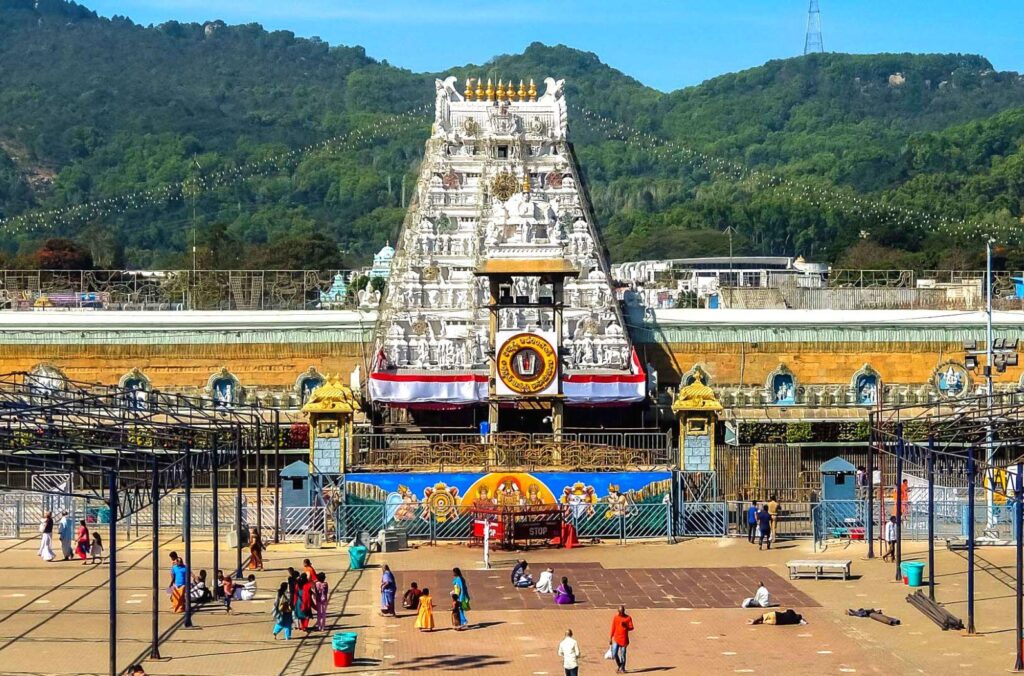
Sri Venkateswara Swamy Temple

The Sri Venkateswara Swamy Temple, located in Tirumala within the Tirupati District of Andhra Pradesh, India, is one of Hinduism’s most revered pilgrimage sites. Dedicated to Lord Venkateswara, an incarnation of Vishnu, the temple attracts millions of devotees annually and is known for its spiritual, cultural, and architectural significance. Key facts History and significance The temple’s origins trace back to ancient times, with references found in Puranic texts such as the Varaha Purana and Bhavishyottara Purana. Kings from the Pallava, Chola, Pandya, and Vijayanagara dynasties expanded and supported the shrine. Its sanctum, containing the idol of Lord Venkateswara, is considered Swayambhu (self-manifested), believed to bestow blessings for prosperity and salvation. Architecture and layout Built in traditional Dravidian style, the temple features a richly gilded Vimana (tower) over the sanctum and intricately carved gopurams (gateways). The complex includes several sub-shrines, pillared halls, and the sacred Pushkarini (temple tank). Devotees often follow a ritual path culminating in darshan (audience) of the deity. Administration and worship The temple is managed by the Tirumala Tirupati Devasthanams, which oversees daily rituals, infrastructure, and charitable activities. The Suprabhatam (morning prayer) marks the start of elaborate daily services, and offerings such as laddu prasadam are distributed to pilgrims. Donations and voluntary service sustain much of the temple’s operations. Pilgrimage and cultural impact Considered one of the richest and most visited places of worship in the world, the temple draws pilgrims globally. The ascent to Tirumala—by foot or road—symbolizes spiritual devotion. Its influence extends through music, art, and tradition, embodying enduring South Indian devotion to Lord Venkateswara.

Sri Venkateswara Swamy Temple Read More »
tirupati district,ap 1
Address

📍 Tirupati, Tirupati District,Andhra Pradesh – 517501
📧 Email:  info@hellotirupati.in
📞 Phone: 8897965113 9398441197